





DIAMOND EDUCATION

Every diamond has distinguishable characteristics making it unique just like our fingerprint. A diamond grading system enables us to understand the various attributes and factors which differentiate each piece as well as decide its value. The 4 C’s namely cut, carat, clarity, and color are the defining aspects of all diamonds around the world. The GIA (Gemological Institute of America) established this system in 1953, which soon became a universal language to communicate about diamonds.
Cut:
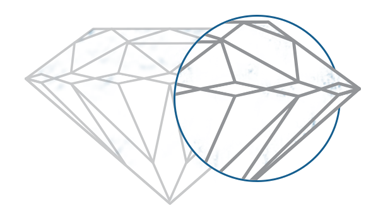
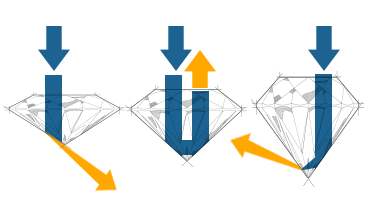
This aspect takes the amount of light that is reflected out of the diamond through its crown into consideration. A well-cut diamond will direct more light through the crown whereas a shallow or deep cut piece would leak light from the bottom. The grade for a cut is assigned on the basis of appearance which includes brightness, fire, scintillation, proportion, polish, and final symmetry. In order to achieve the maximum value, a rough diamond is evaluated for the best possible cut.
Carat:
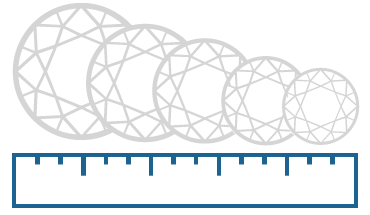
The load of a diamond plays a significant role in determining its price. Carat, derived from the word carob, a Mediterranean seed with consistent weight, is the measure used to calculate the heaviness of all diamonds. A single carat is equal to 0.2 grams and is divided into 100 points which means that 50 points represent half a carat or 0.1 gram. The greater the carat, the more valuable a diamond becomes. Today, prong settings are manipulated to fit virtually any size.
Clarity:
When a 10x magnification glass is placed on a diamond, nothing may go unnoticed. All diamonds carry some inclusions that are on the inside or blemishes that are on the surface which makes them stand out. A flawless piece is very rare, making it the most expensive. The heating process through which a diamond goes through is the reason elements get trapped or attached to the formation. The clarity scale is also known as the rarity scale.
Color:
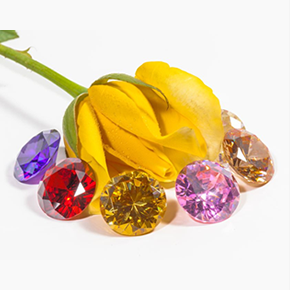
Diamonds range from colorless to yellow to light brown and are at times found in a spectrum of fancy colors like blue or red. The closer it is to colorless, the rarer and more valuable the stone. Color scale runs from D to Z with D representing the purest form without any color and Z depicting heavy yellowish brown. The grading system of fancy diamonds is completely different.

About Riddhi Corporation

  • Established :
    2014
  • Location :
    Surat, Gujarat, India
  • President :
    Mr. Patel
  • Workforce :
    More than 280
  • Sectors :
    Importer Manufacturer Exporters

RIDDHI CORPORATION company was founded for growing the largest high-quality single-crystal diamonds of Ila and lb types. We actively develop Jewelry, Industrial and Scientific international market sectors and explore innovative approaches and technologies to improve quality of our diamond products. The company is focused on building partnerships with international research institutes and organizations to create mutually-beneficial collaboration with the main purpose-to contrbute the whole diamond market.

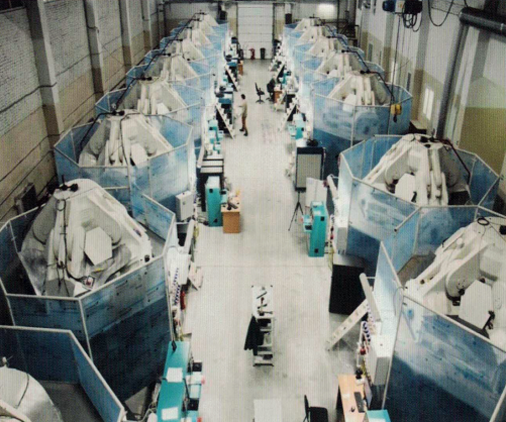
The manufacturing facilities are equipped with the most modem messes improved in-house by our engineers and technologists. They developed unique technology of diamond growth which allowed us to set several wad-records in the tield of diamond growth and healment. No one could beat these records to this day and we are annually aiming for more by increasing achievements constantly.

Diamonds production technologies:

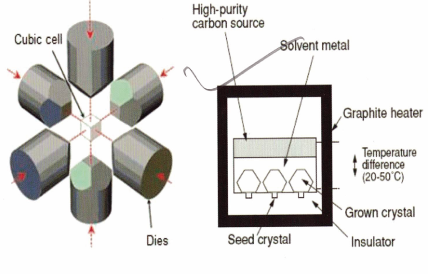
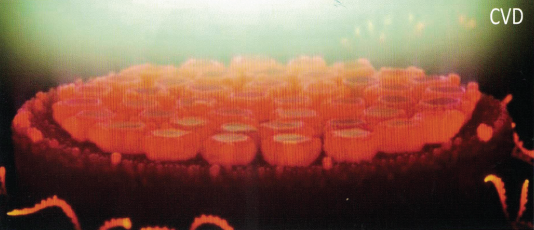
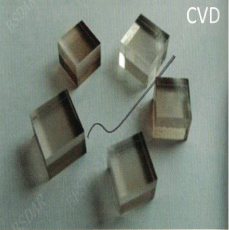
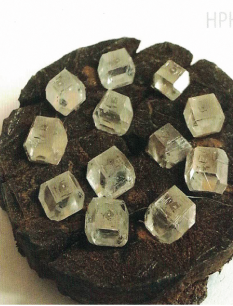
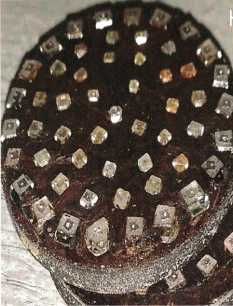
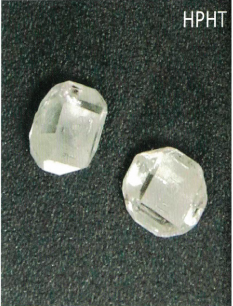
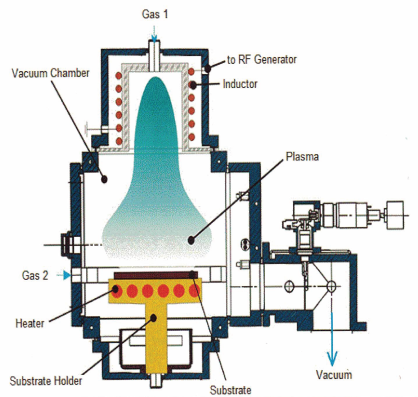
HPHT (High Pressure High Temperature) N CVD (Chemical Vapor Deposition/ are fundamental methods of diamonds growth.

HPHT
- Spontaneous synthesis of diamond single crystals and powders
- Controlled synthesis of diamond single crystals ona seed*
Synthesis of polycrystalline diamond by sintering powders.
CVD
- Synthesis of single-crystal diamonds on HPHT or CVD substrates;
- Synthesis of polycrystaline diamond on the substrate from other crystalline materials (polycrystaline diamond, silicon carbides or nitrides of various materials).
Exponsive Synthesis
- Production of cluster polycrystalline (ultrafine) diamonds during the process of ammunition utilization;
- Production of detonation polycrystalline diamonds of micronrange during the explosion of a TNT and RDX, metal catalysts and fine graphite mixture.

HPHT

High Pressure High Temperature

CVD

Chemical Vapor Deposition
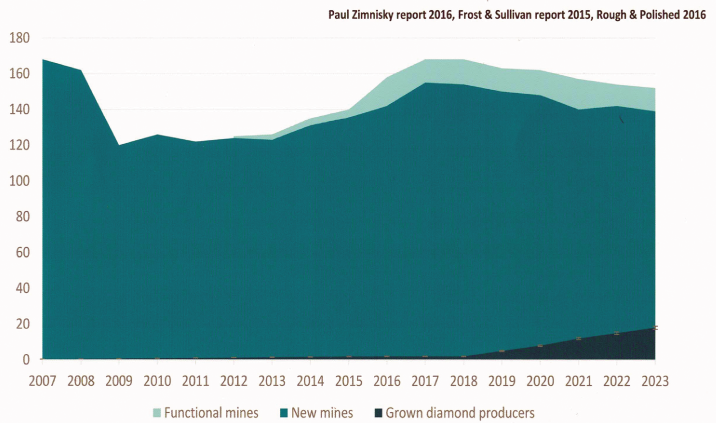
In 2016 were mined and produced 137.5 mln carats (+1.3%) of diamonds in total amount of 20.0 bln USD. The total amount of grown diamonds is estimated by experts between 0.5 and 1.5% from total amount of mined. Thus we can determine that in 2016 were grown approx. 1.4 min carats of grown diamonds. To compare, offically in 2014 were produced only 360.0k carats of jewelry quality grown diamonds, in 2015 - approx. 1.0 min.
Si 4H-SiC GaN(epi) Diamond
Band rap Eg (eV) 1,12 3,23 3,44 5,5
Electron concentration ni, (cm-3) 1,15 * 10-10 8,2 * 10-9 1,9 * 10-10 1,6 * 10-27
Dielectric conrant e, 11,9 9,8 9 5,0
Critical field E MV/Vs 0,3 2,2 2,0 5,0
Electron mobility u, mc2/Vs 1350 900 1150 4500
Electron mobility u, mc2/Vs 480 120 200 3800
Saturated velocity vs, 107cm/s 1,0 2,0 3,0 2,7
Thermal conductivity Y, W/cmK 1,5 5 2 22
Max. operationg Temperature Tmax (C) 175 500 650 900
Breakdown Electric Field (Ebr, MV/cm) 0,3 3 3,3 10
  • Micro and power electronics;
  • Semiconductors, radio-electronics industry;
  • Detectors and sensors;
  • Optics & Lasers;
  • Vacuum and diamond windows;
  • X-ray and medical equipment;
  • Quantum computers and photonics;
  • Acoustics and electrochemistry;
  • Abrasive and drilling materials;
  • Aerospace and military fields;
  • Processing and manufacturing;
  • CVD process;
  • Jewelry.
Main manufacturers of grown single-crystal diamonds for electronics, optics, industrial and other promising applications:
Location Presses Type Presses Amount Rough volume, ct/month Rough size, ct
CJSC FOT Moscow BARS-300 62 < 600 < 6.2
FSBI TISNCM Troitsk Toroids 60 < 500 4.0 - 5.0
V.S.Sobolev IGM SB RAS Novasibirsk BARS - 300 10 < 150 < 6.0
New Diamond technology LLC Siant Peterburg Cubic Presses 750 N 850, Toroids 45 (32/13) < 4 200 < 50.00
SC Diamond plates
Diamond anvils
SF Diamond anvils
Diamond lences
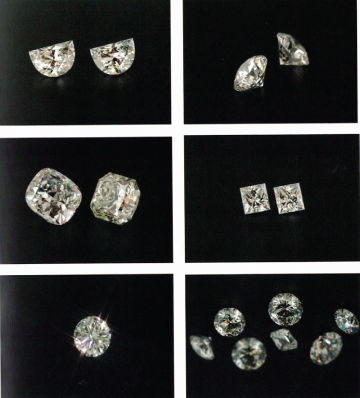
Polished diamonds
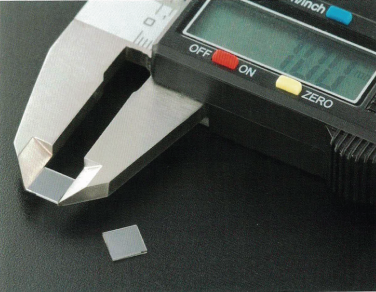
We provide SCDP from 2.5x2.5 mm up to 15.0x15.0 mm with standard thickness 0.5 mm and orientation (100).
For special technical purposes we are able to vary thickness, surface and sides orientations (e.g. (111), (110) (113) etc.) and diamond types (lla and llb)
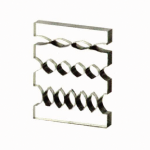
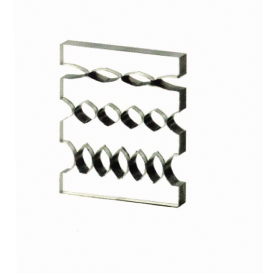
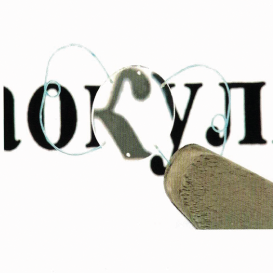
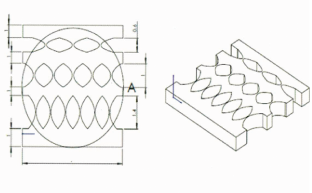
High-power and high-accuracy smart water jet laser allows to cut mono- and multisectorial plates with different shapes.
Mono-sectorial SCDP 7.0 * 7.0 * 0.5 mm
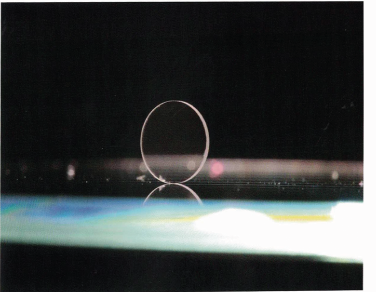
SCD window with 3.0 mm in diameter
manufactory standard Upon special request
Size, mm 2.5 * 2.5 - 10.0 * 10.0 < 15.0 * 15.0
Thickness, mm 0.5 0.1 - 3.00
Type lla llb
Face surface oriantation (110) (111), (110), (113)
Crystallography Multi-Sectorial Mono-Sectorial
Roughness, nm 0.1 - 10.0 -
Miscut 90+/-3o -
Parallelism +/-0.02 -
Lateral Tolerance, mm +/-0.05 -
Thicness Tolerance, mm +/-0.05 -
Edges Polished Laser cut
Edges Features, mm <0.02
Laser water-jet
Boron concentration, ppb ~ 10 < 50ppm
Nitrogen concentration, ppb ~ 10 < 10ppm
Dislocation density, cm-2 ~ 10 2-3 < 102
Thermal conductivity, W/mK ~ 2200
Absorption coefficient, cm-1 ~ 0.0045
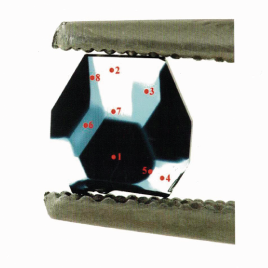
In 2007 new diamond, technology will present unique type lla multi-sectorial HPHT SCDP with ½ inch size. It will be the largest high-quality SCDP cut from lab-grown diamond, which can be applied for electronics, semi-conductors, optics and other fields of researches and industries. On the picture, you will see the semi-final plate with 15.82 x 14.69 mm size and 1.0 mm thickness. Estimated size of the product is approx. 13.0 x 13.0 mm.
Concentration of boron (B uncompensated)
Point 1 – 8.7 x 1018 cm3 (50.0 ppm)
Point 8 – 1.4 x 1018 cm3 (8.0 ppm)
Point 2 – 4.0 x 1018 cm3 (0.2 ppm)
The company production capacity and technology allows:
  • To produce unique combined (hybrid of lla and lla types) single-crystal diamond plated with different concentrations (e.g. with baron doping);
  • To produce substrates for CVD with special angles to enlarge growing diamond;
  • To control and manage a growing diamond morphology which allows to make sectors larger;
  • To reach low dislocations density approx. 102-3 cm-2 ( in comparison with other suppliers- 107-10 cm-2)
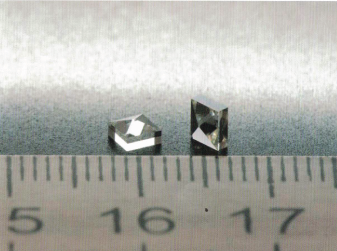
The exceptional properties of diamond are used in research centers to study various properties of materials under high pressure over 1 min bar.
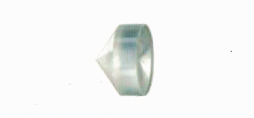
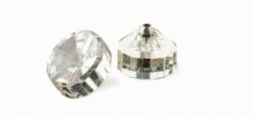
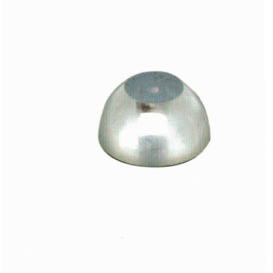
We produce semi-final and faceted diamonds anvils from 2.6 mm up to 4.65 mm in diameter. Table can be oriented by (100) and (111) with deviation +/-5.
All of them are produced from high-purity diamonds to lla type without surface damage, inclusions and bulk defects.
Diameter, mm Height, mm Gridle, mm Weight, Ct Cone
2.60 2.70 1.40 0.018 - 0.19 45
3.20 3.00 1.40 0.28 - 0.29 45
3.65 3.22 1.40 0.38 - 0.40 45
4.15 3.50 1.40 0.50 - 0.55 45
4.15 3.65 2.20 0.55 - 0.58 35
4.65 3.63 2.30 0.60 - 0.65 30
Diamond lenses can be applied for various technologies, which involve infrared, ultra-violet, visible, and X-ray ranges.
Compound reflative lens
Intraocular lens (IOL)
Lenses for spectrometers
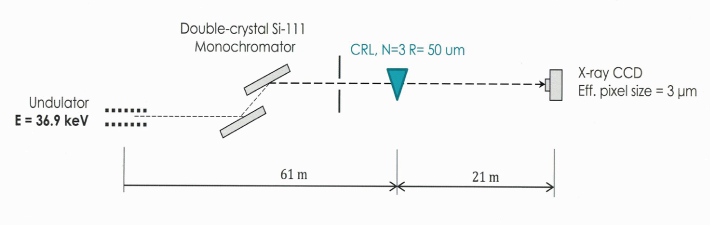
Research results state that first test sample of compound refractive lens (CRL) shows promising results: very good focusing with energy of 12 keV and eff. Pixel size 6.7 um. One year after at PETRA-lll we achieved there times higher energy and two times thinner eff. Pixel size.
In the nearest future we still plan to increase energy and make beam thinner (up to 1 um) and uniform.
Eco-friendly diamonds. The growth of diamonds requires less energy and does not require mining. That means no draining of lakes, no explosions, no damage to the fragile ecosystem of the earth.
100% conflict-free (no blood diamonds) Blood diamonds are diamonds mined in a war zone and sold to finance insurgency, invading army’s warlord’s activity.
General characteristics: Colors: D-F, fancy blue, FLOP, FIY
Clarity: IF-SI
Size: 1.0-10.0 Ct+
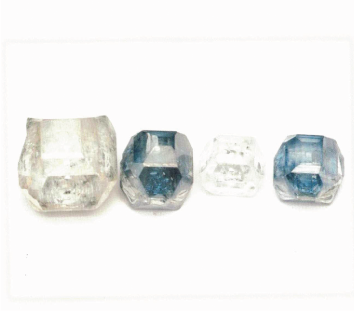
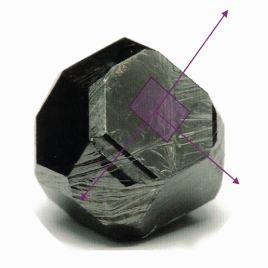
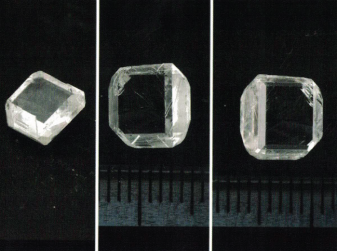
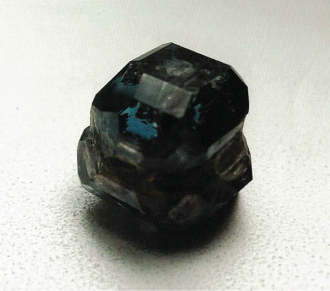
The cubic-octahedron shape of a diamond is specific of HPHT method. The company has a technology, which allows to control and manage diamonds morphology to optimize yields ratio.
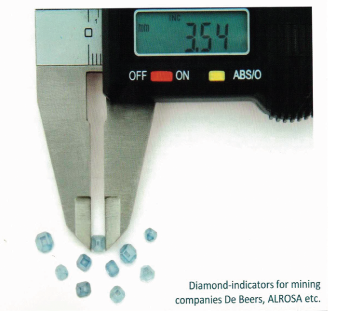
We produce colorless (white) rough diamonds of 1C grade (D, E, F colors) and 1Q-4Q quality (IF-SI clarity). Since 2016 fancy blue, deep blue and vivid blue are commercially available.
Standard sizes from 8-10 GR and up to 10.00 Ct. 10.00 Ct. + for special orders.
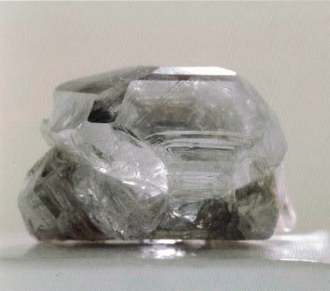
We grow the largest diamonds in the world of type: colorless (lla type) and blue (llb type). Rough diamonds can be each 50 Ct in size. Below you will find images of the largest lla and lla types rough diamonds grown by new diamond technology, which were used to produce world-record polished diamonds: the biggest colorless and fancy blue polished diamonds.
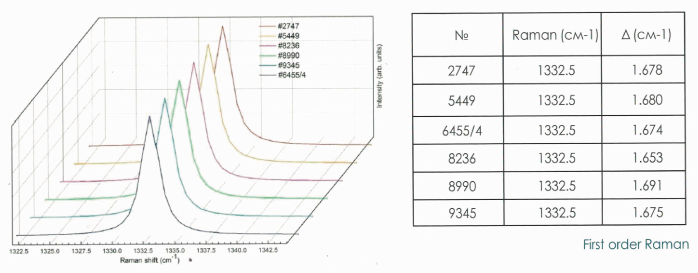
The line width (1332.5 am-1 FWHM) of high quality single crystal diamond rages between 1.70 – 1.80 cm-1. It can be seen that crystals stably come out the same quality. Coincidence of the positions of the maxima and the half-width of the line, with an average lone width of 1.67 cm-1, which leads to the conclusion that research sample (6 piece of different sizes and different production time) are characterized by a high crystal-clear perfection, stable quality and low level of uncontrollable impurities
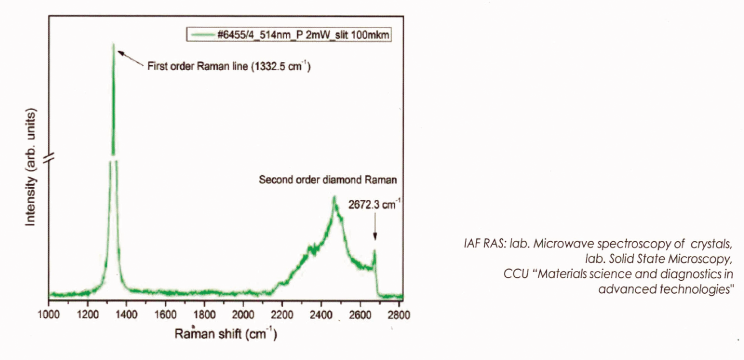
Raman spectra of the second order registred in these corresponds with one-phonon density of states in the diamond.
This spectra is specific only for high-quality diamond crystals with near perfect structure.
Loading...